A Wellness App Blending Play With Mental Health Support
- Role
- UX/UI Designer, Researcher
- Timeline
- August 2020 · 4 months
- Skills
- Mobile UX, Branding, Mental Health
- Team
- 5 UI Designers + 2 UX Researchers
TL;DR
Designed and researched Lofu, a gentler mental wellness app that lowers the barrier to self-care for Asian communities facing stigma, privacy norms, and language barriers. Pairing hand-drawn virtual pets with short reflection activities, warm visuals, and multilingual support, then validated through two rounds of usability testing so users can build small daily habits without feeling like therapy on day one.
Overview
How might we make emotional wellness less intimidating?
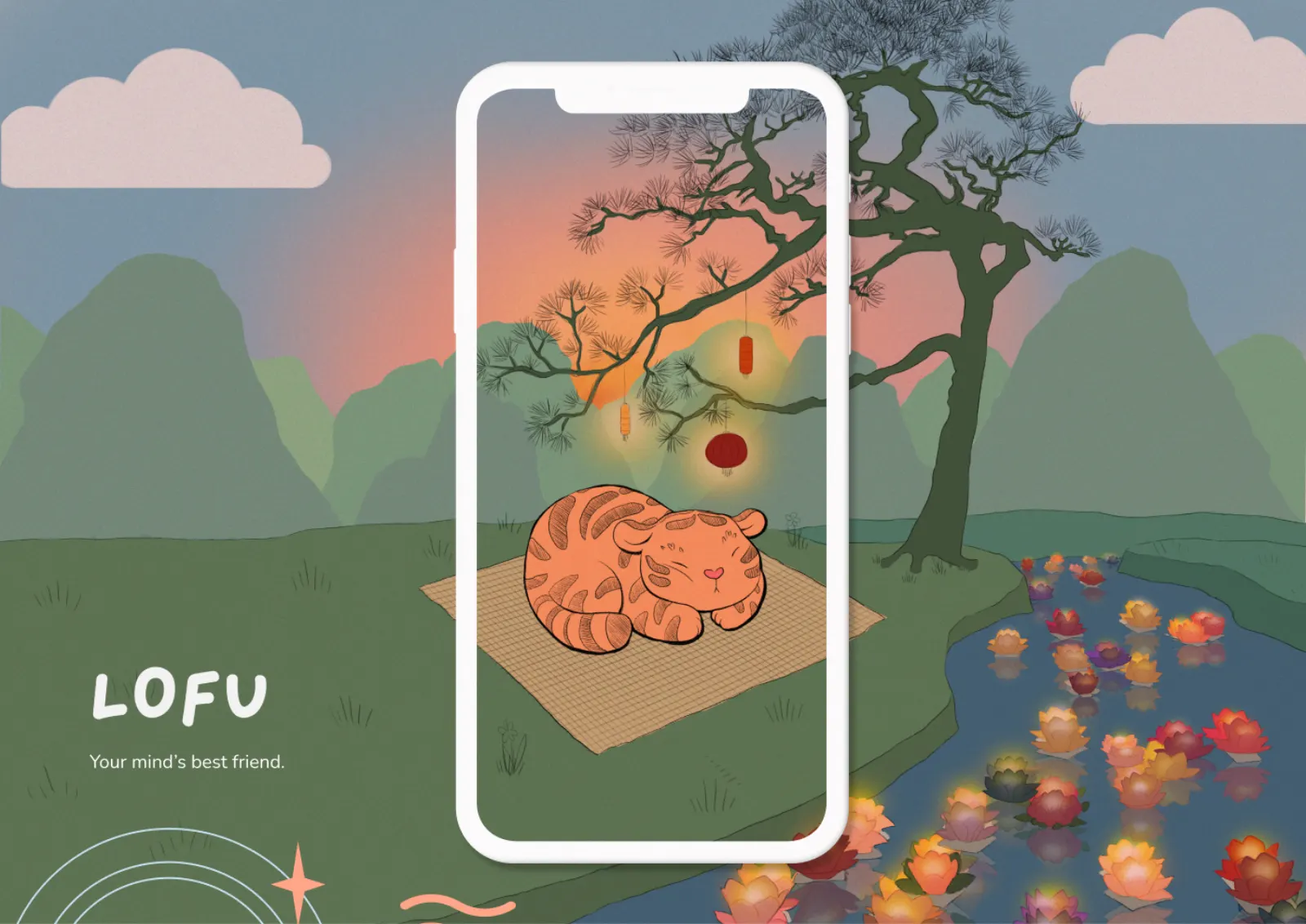
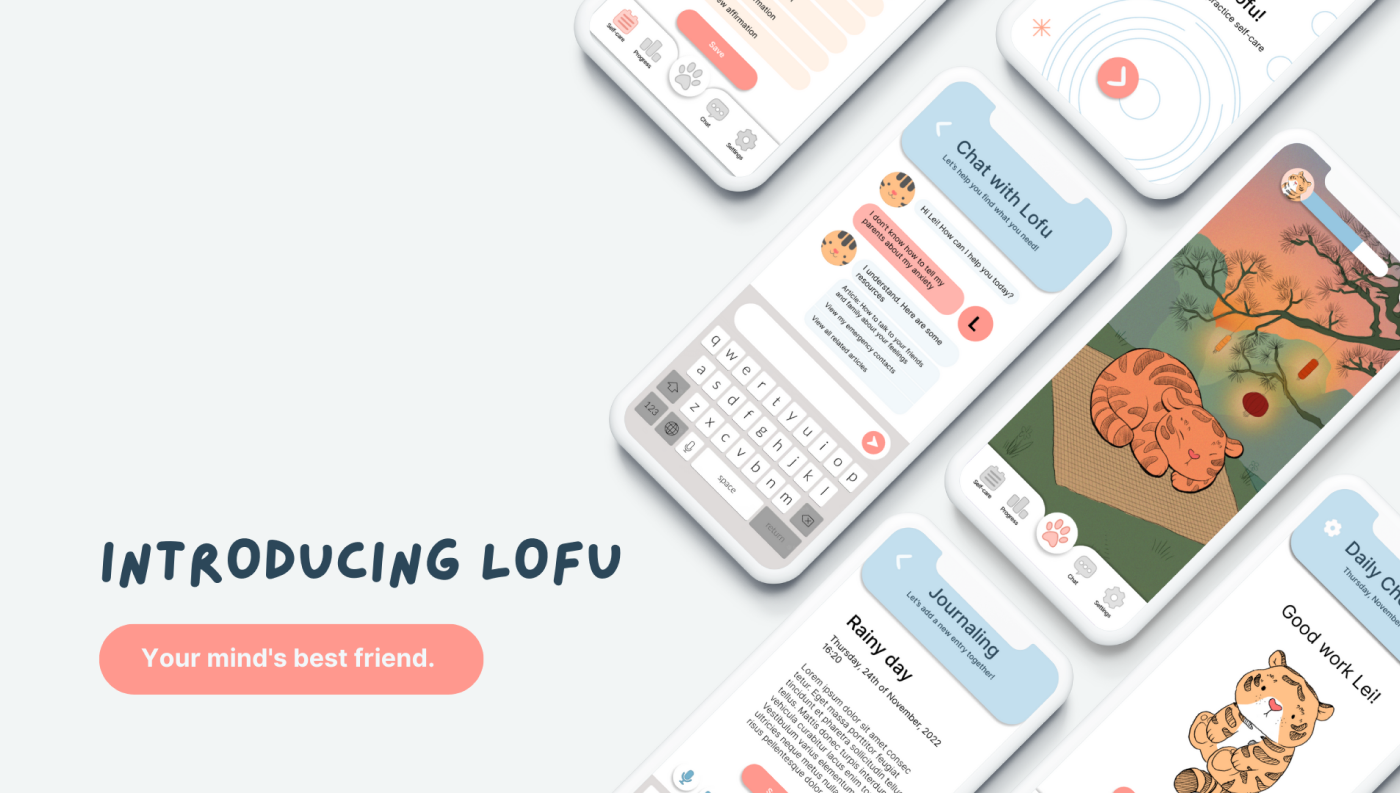
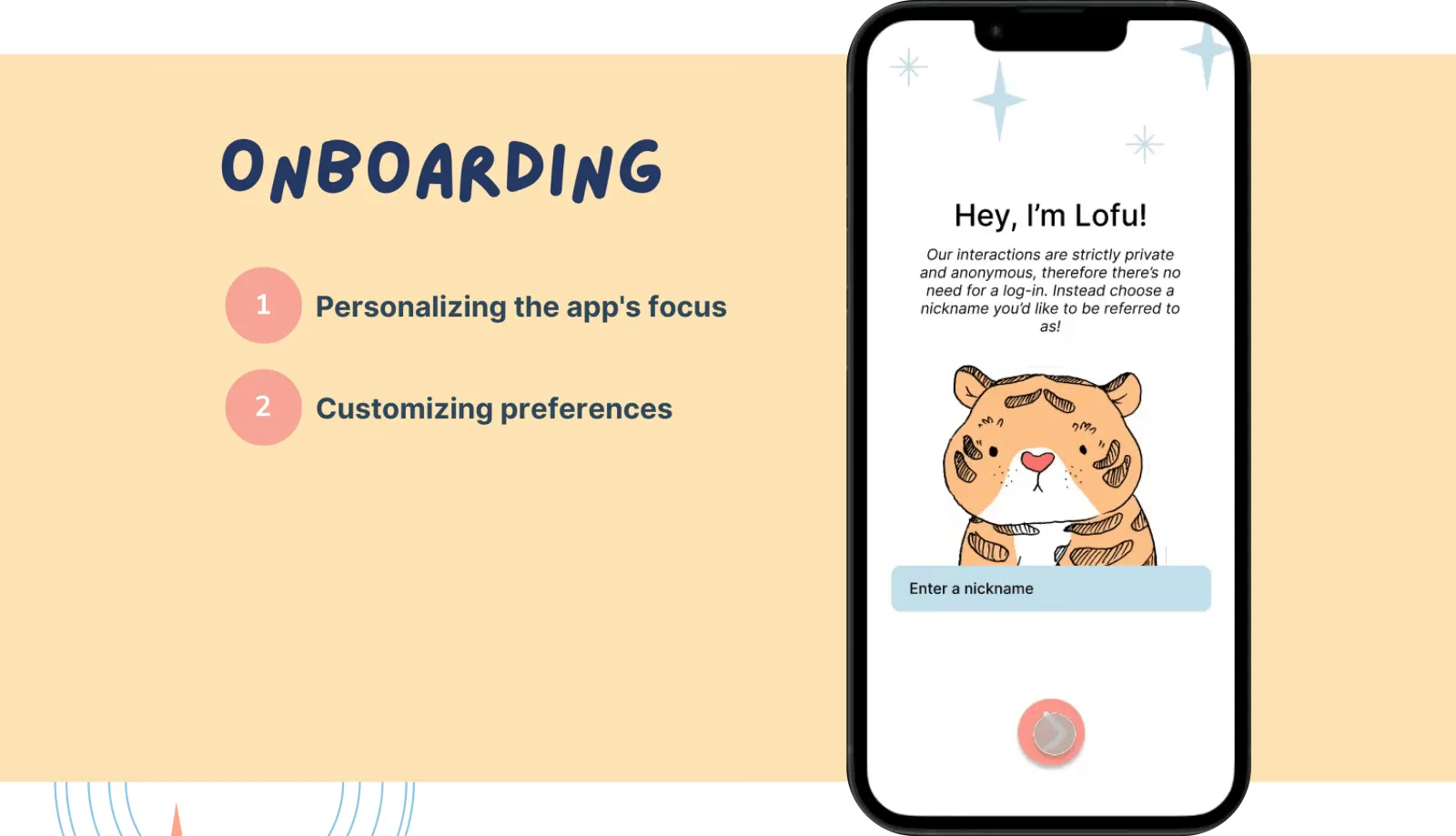
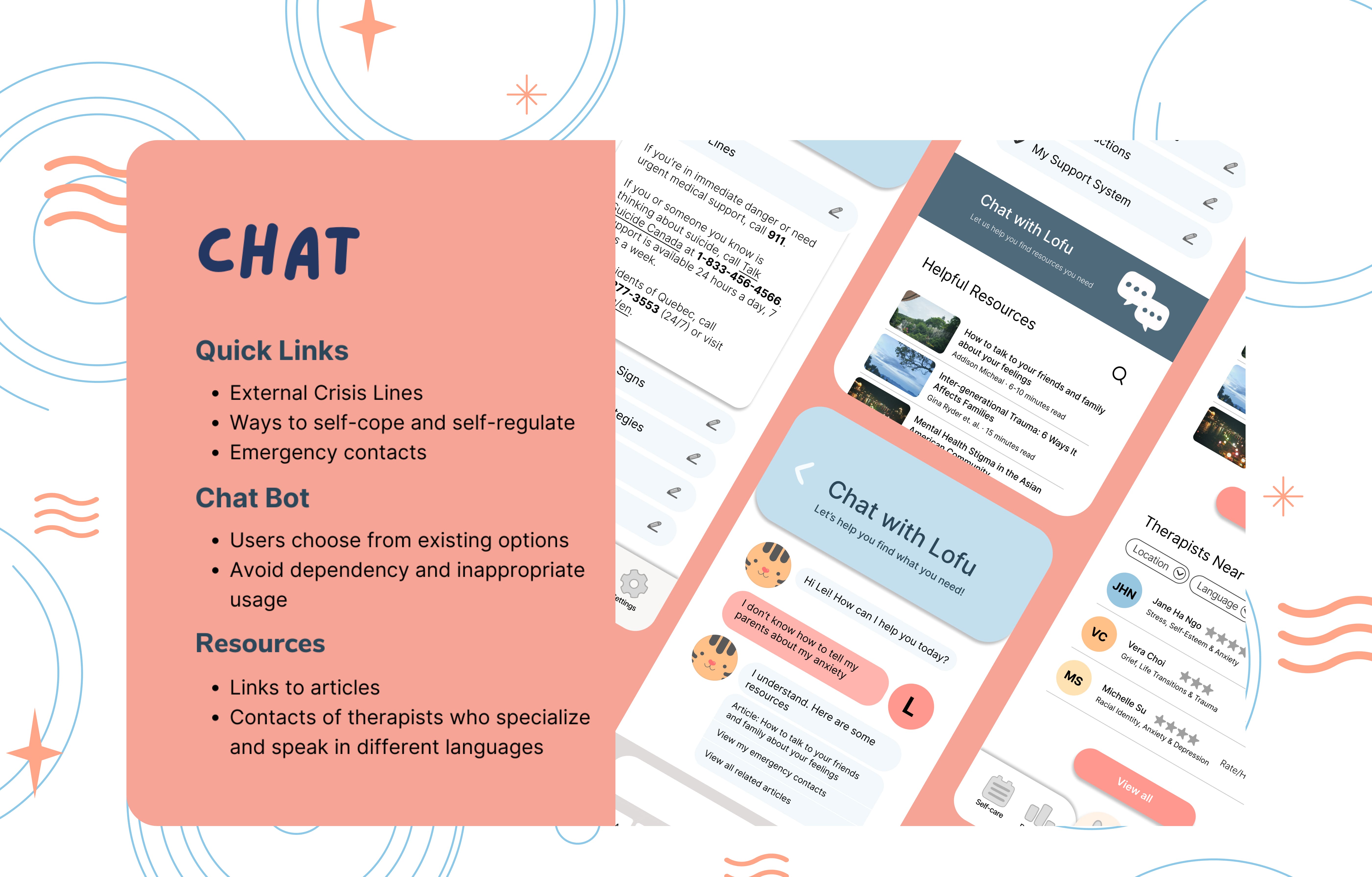
Meet Lofu - your mind's best friend who manages emotional health through gamification techniques. The Lofu app enables users to regulate mental health resources while taking care of virtual pets that are based on animals from countries within Asia. Lofu's end goal is to spark change in the stigma surrounding mental health and well being in the Asian community.
For many people, seeking mental health support is already difficult. Within many Asian communities, that challenge is often compounded by cultural stigma, language barriers, and the pressure to appear resilient. As a result, many people avoid asking for help until they're already struggling.
Lofu began with a simple question.
How might we make emotional wellness feel less intimidating to engage with?
As a UX/UI designer and visual designer on a team of seven, I created a mobile experience that combined mental wellness resources with gentle gamification to encourage consistent self-reflection in a way that felt welcoming rather than clinical.
Table of contents
Problem
Lowering the barrier to the first step
Most mental health apps ask users to confront difficult emotions the moment they open the app. For someone already hesitant to seek support, that can feel overwhelming. Our challenge wasn't designing another mental health resource. It was designing an experience that lowered the emotional barrier to taking the first step.
We wanted users to feel comforted, not judged.
Research
Understanding cultural barriers
Before exploring solutions, we researched the unique barriers that prevent many people within Asian communities from accessing mental health support. Several themes consistently emerged.
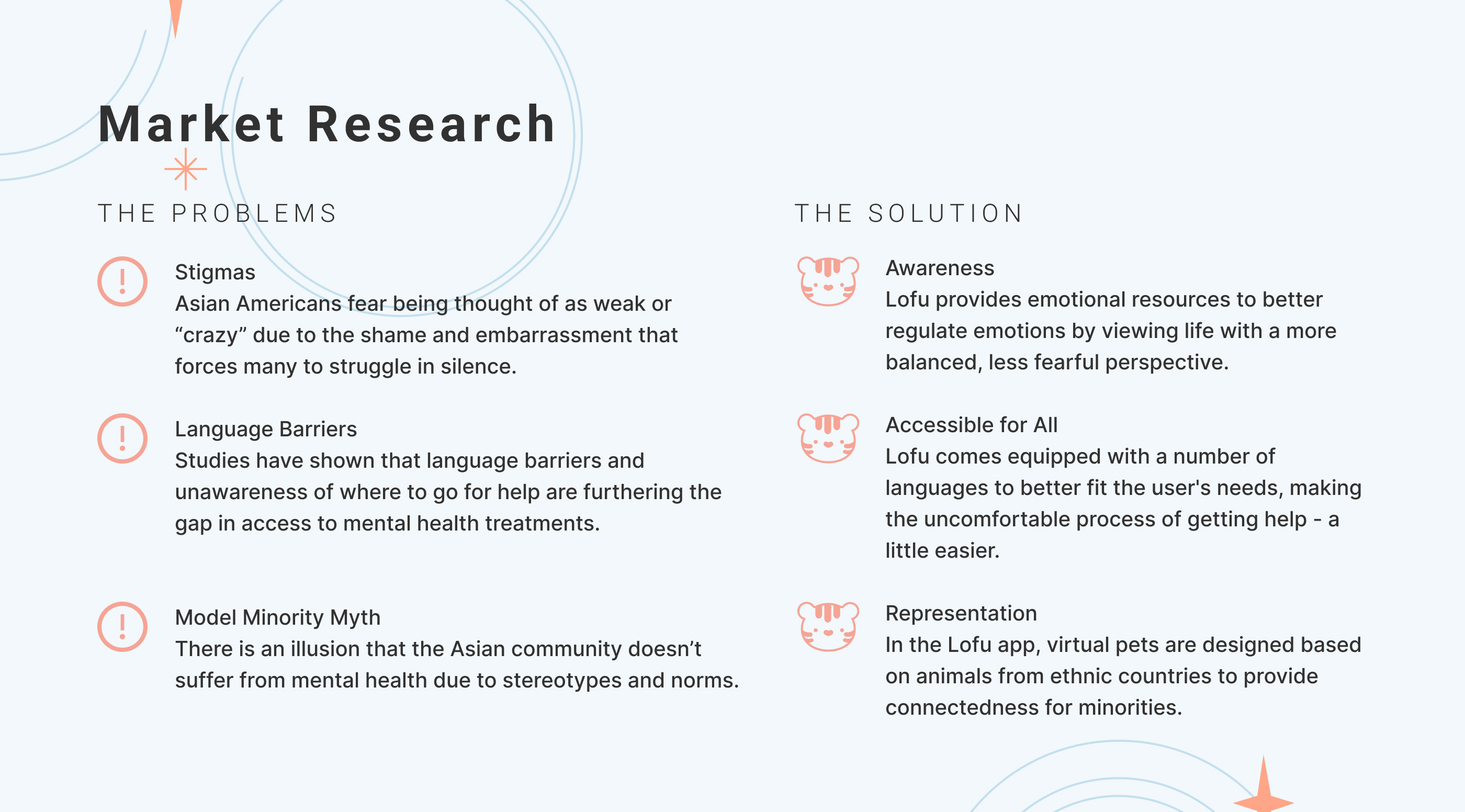
Mental health was often viewed as something that should remain private, making it difficult for individuals to ask for help without fearing judgment. Language barriers and limited awareness of culturally relevant resources created additional obstacles, even for those actively looking for support.
These findings shifted our focus.
Instead of asking how we could guide people to seek therapy, we asked how we could create an experience that firstly, encourages them to take care of themselves.
Solution
Designing around small, approachable habits
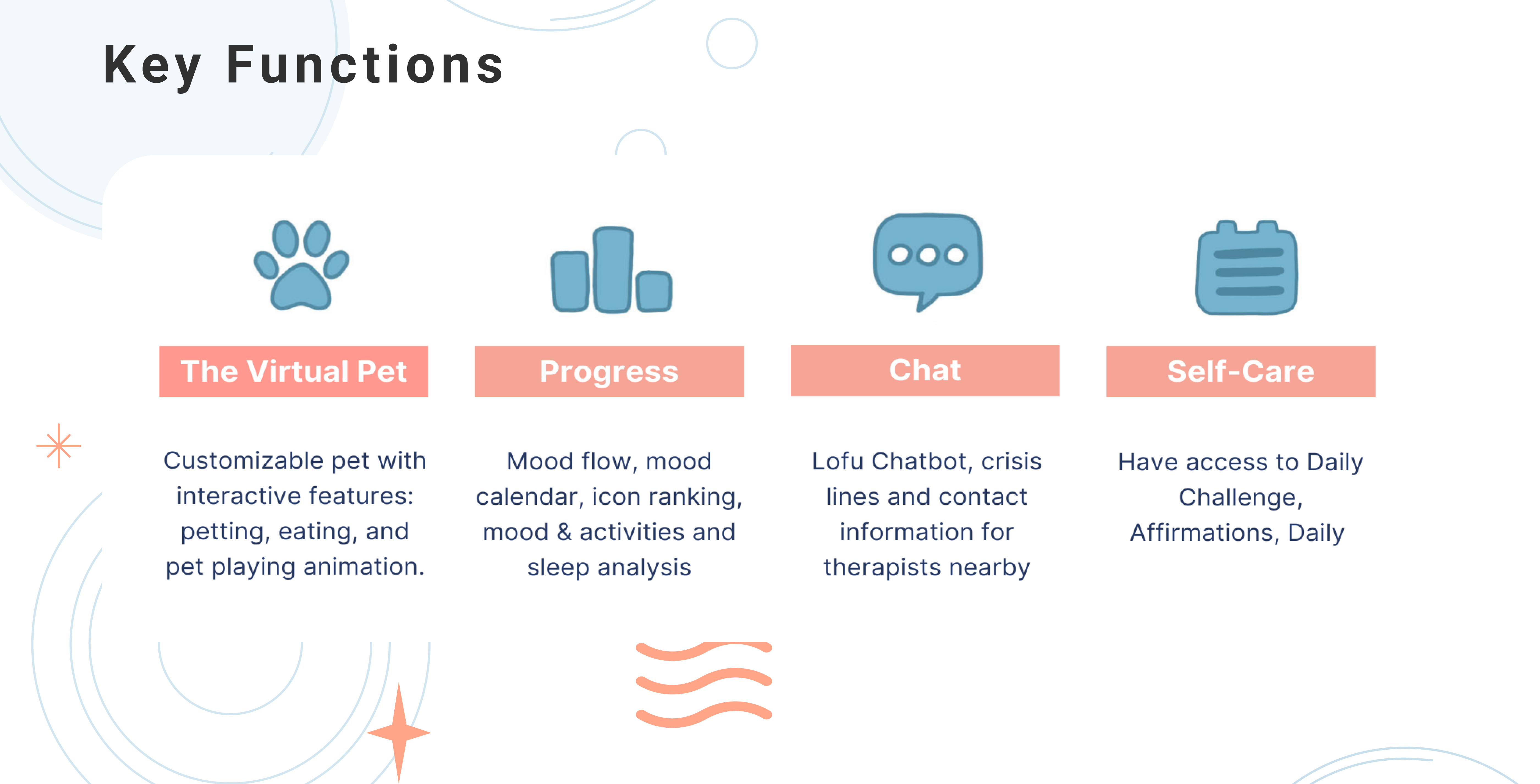
Rather than centering the experience around symptoms or diagnoses, we focused on building positive daily habits through small, approachable interactions.
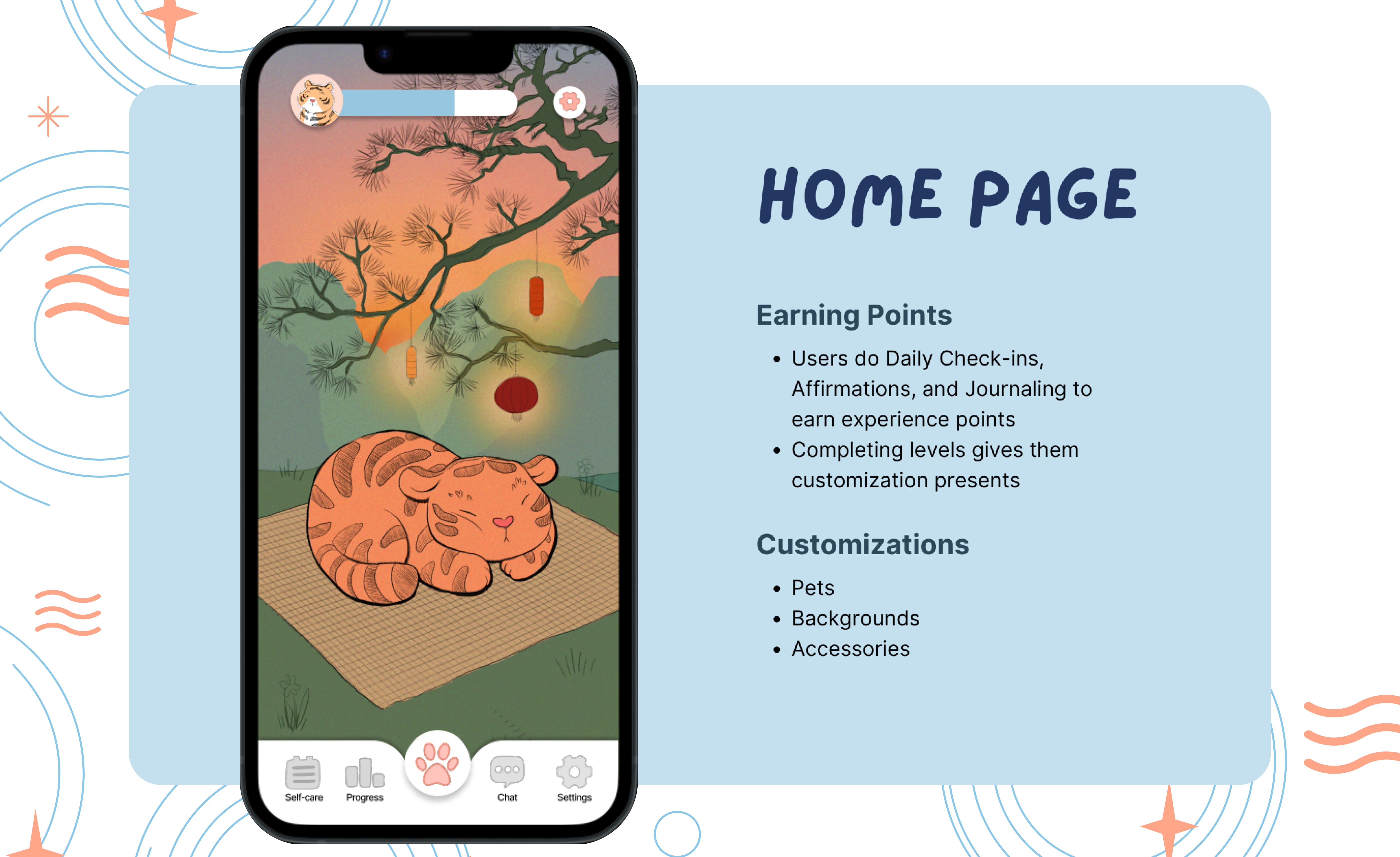
Gamification became an important design tool, not because we wanted the app to feel like a game, but because caring for something often feels easier than caring for ourselves.
That insight inspired Lofu's virtual companion system.
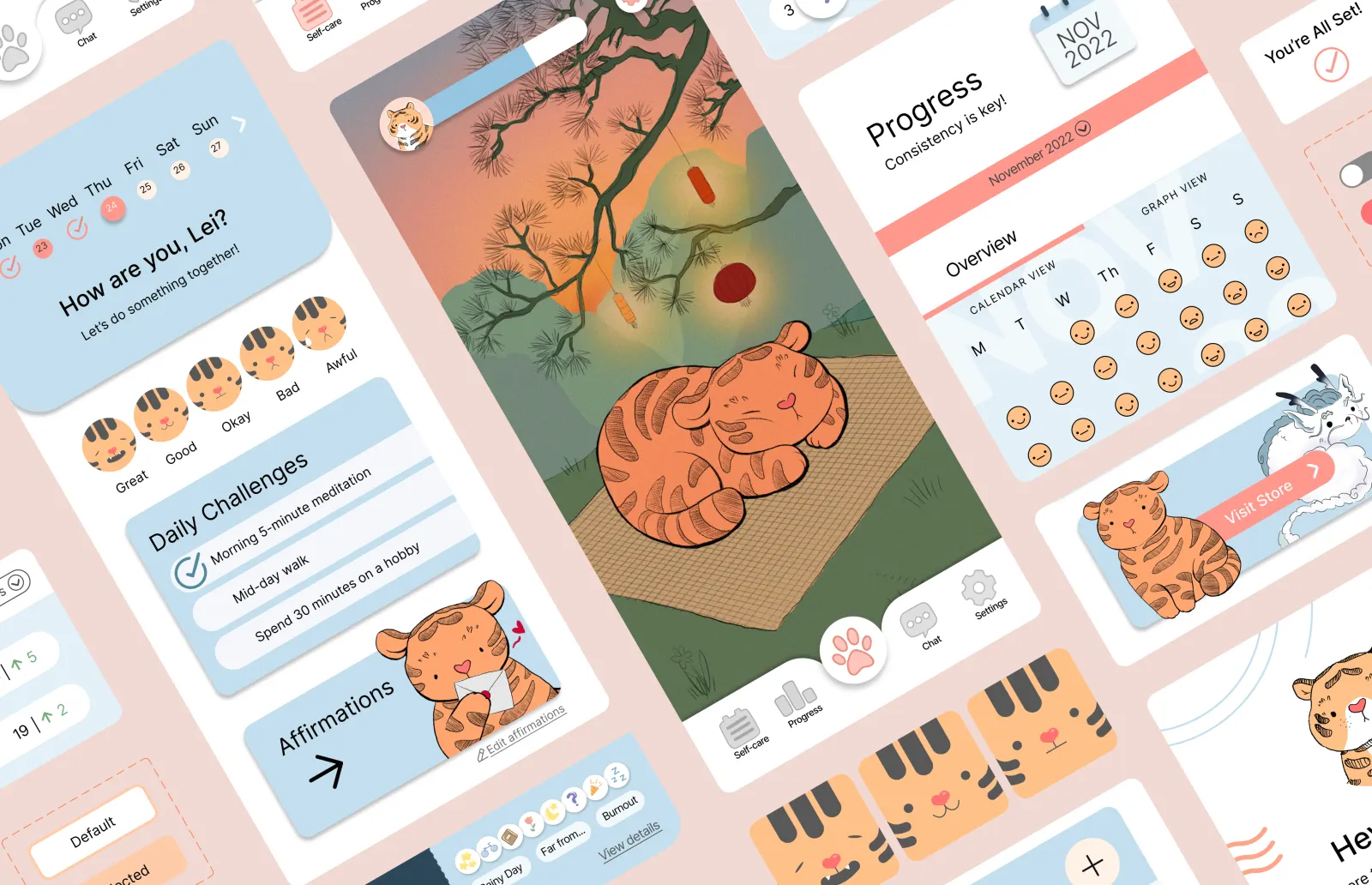
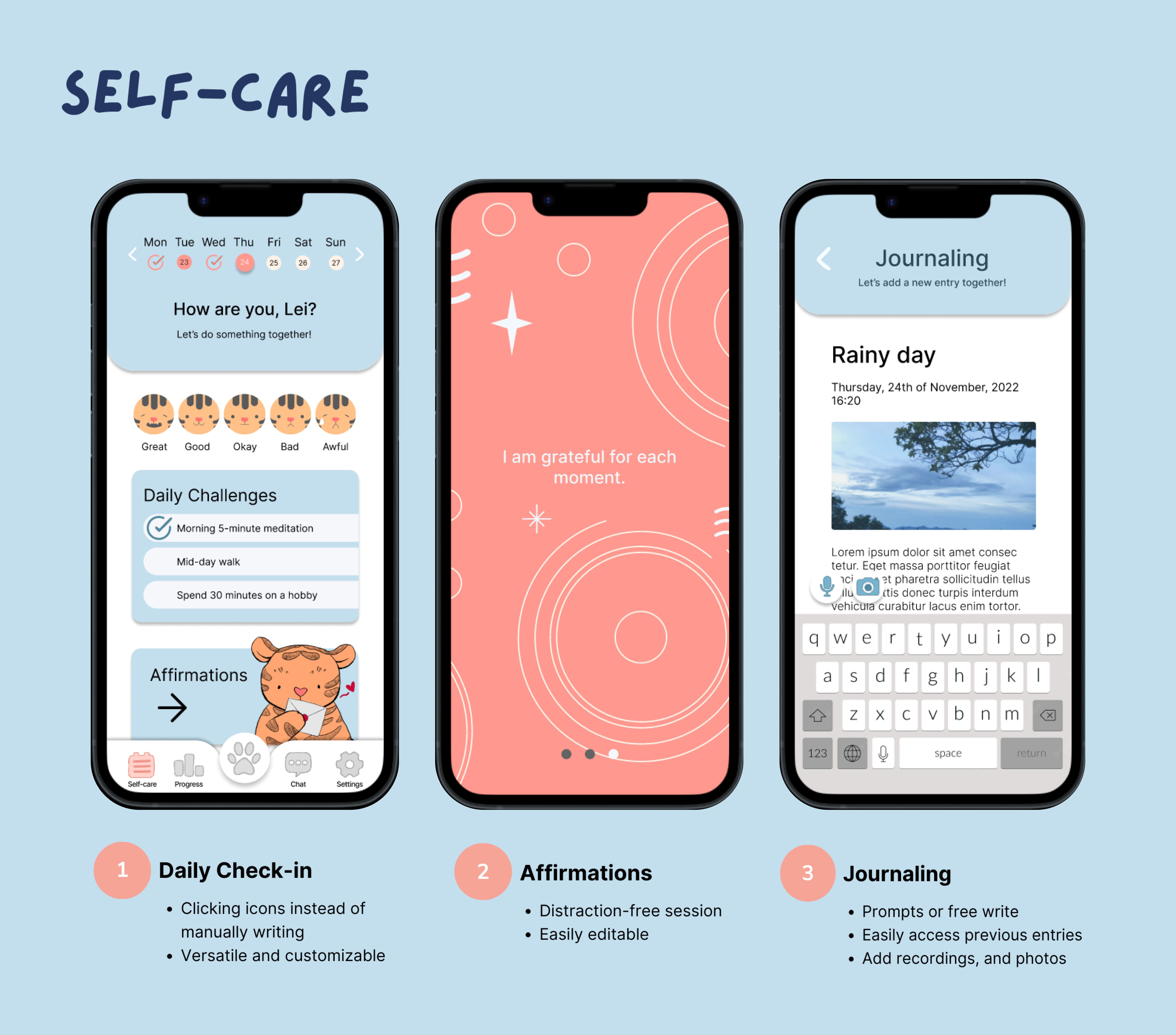
Users complete short activities that encourage emotional awareness while simultaneously caring for a virtual pet, helping transform self-care into a routine that feels encouraging instead of overwhelming.
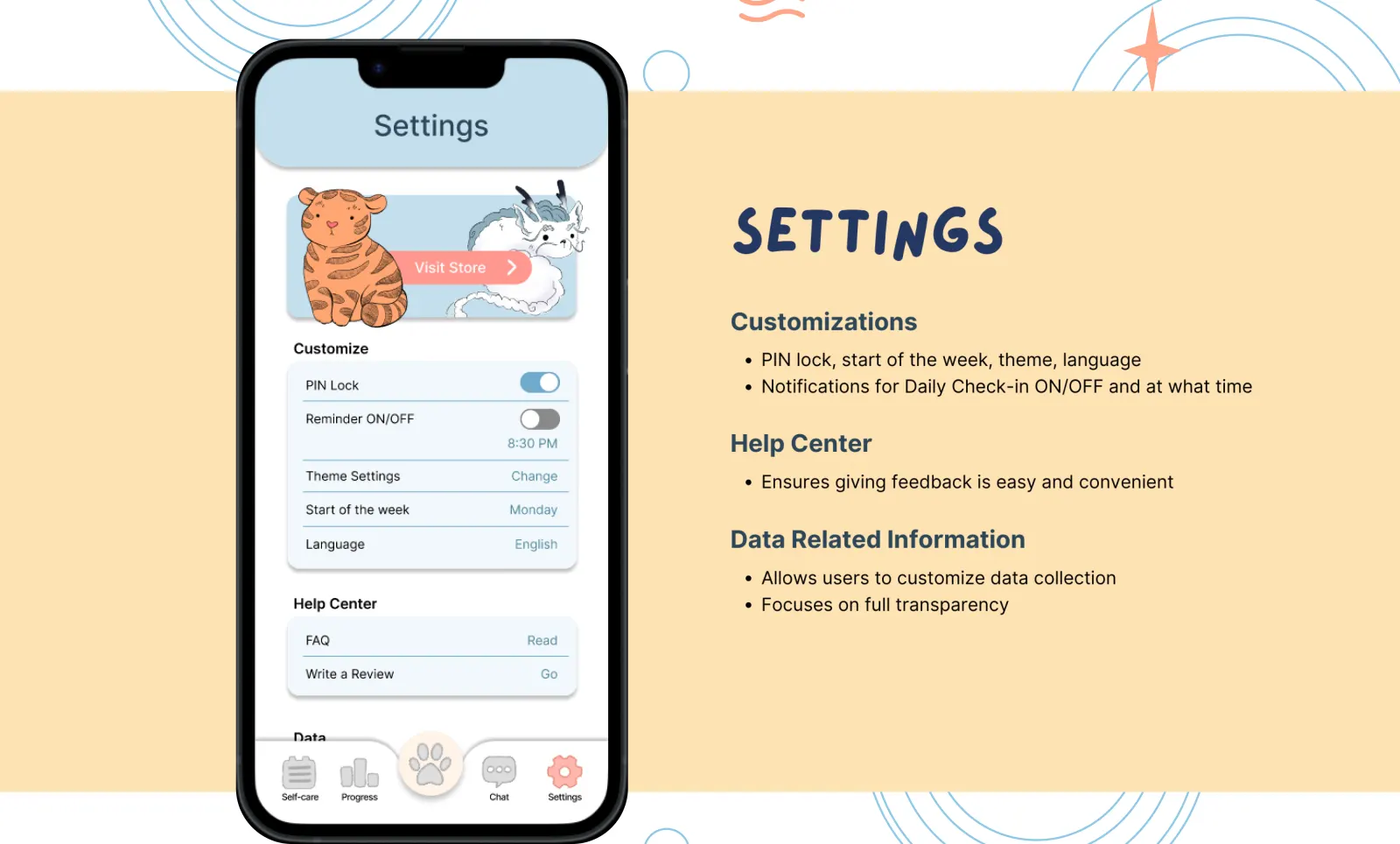
To make the experience more culturally welcoming, we also designed multilingual support and created virtual pets inspired by animals found across different regions of Asia, giving the product a stronger sense of familiarity and representation.
Visual Identity
A warm, handcrafted aesthetic
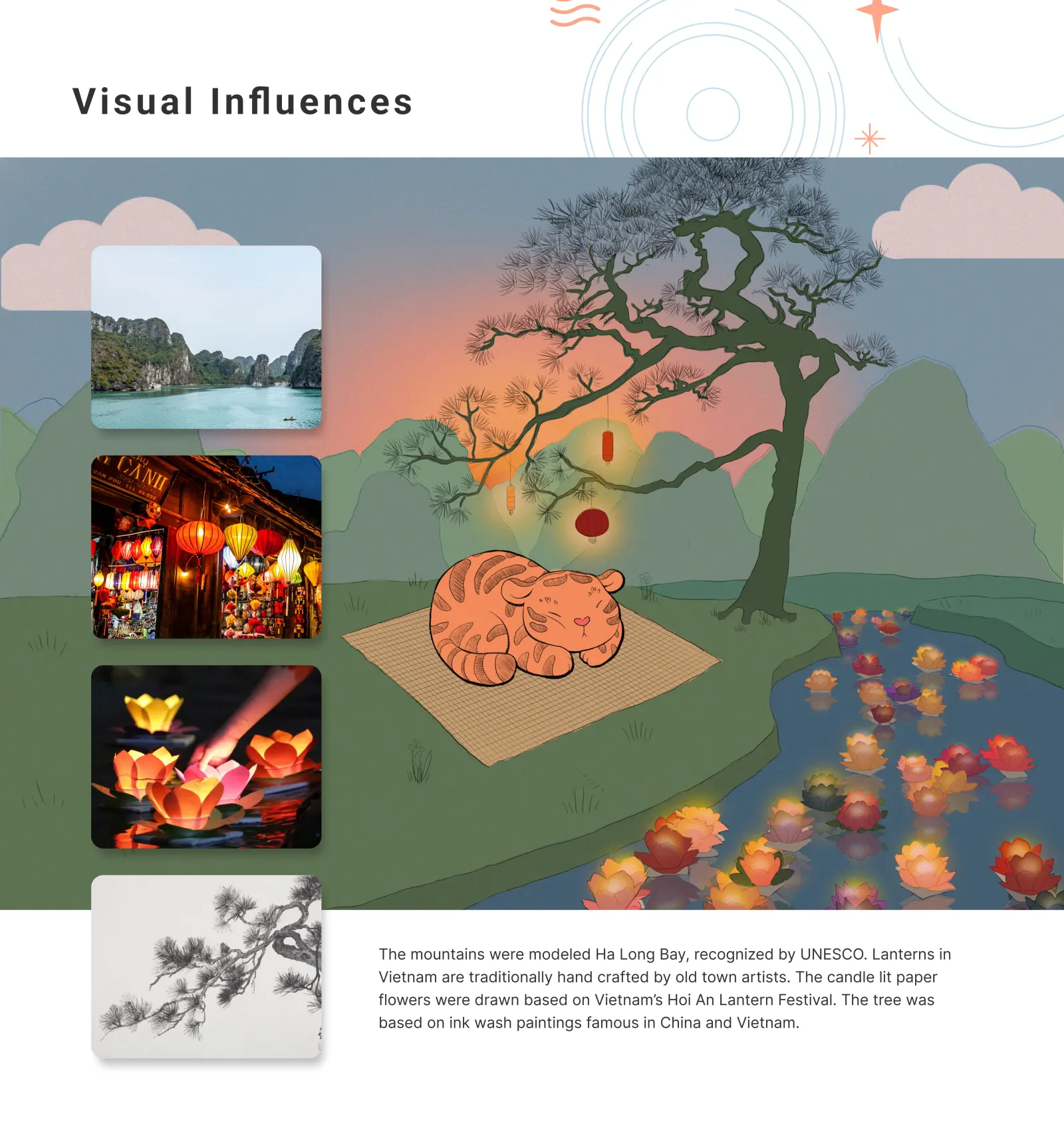
I wanted Lofu to feel warm, personal, and comforting from the very first screen.
Many mental health apps rely on clean, clinical interfaces. Instead, I explored a softer visual language inspired by traditional art materials.
I illustrated each virtual pet by hand using colored pencils before scanning and refining the artwork digitally. Preserving the imperfect textures of paper and pencil helped create a handcrafted aesthetic that felt gentle, approachable, and distinctly different from the polished look of many wellness apps.
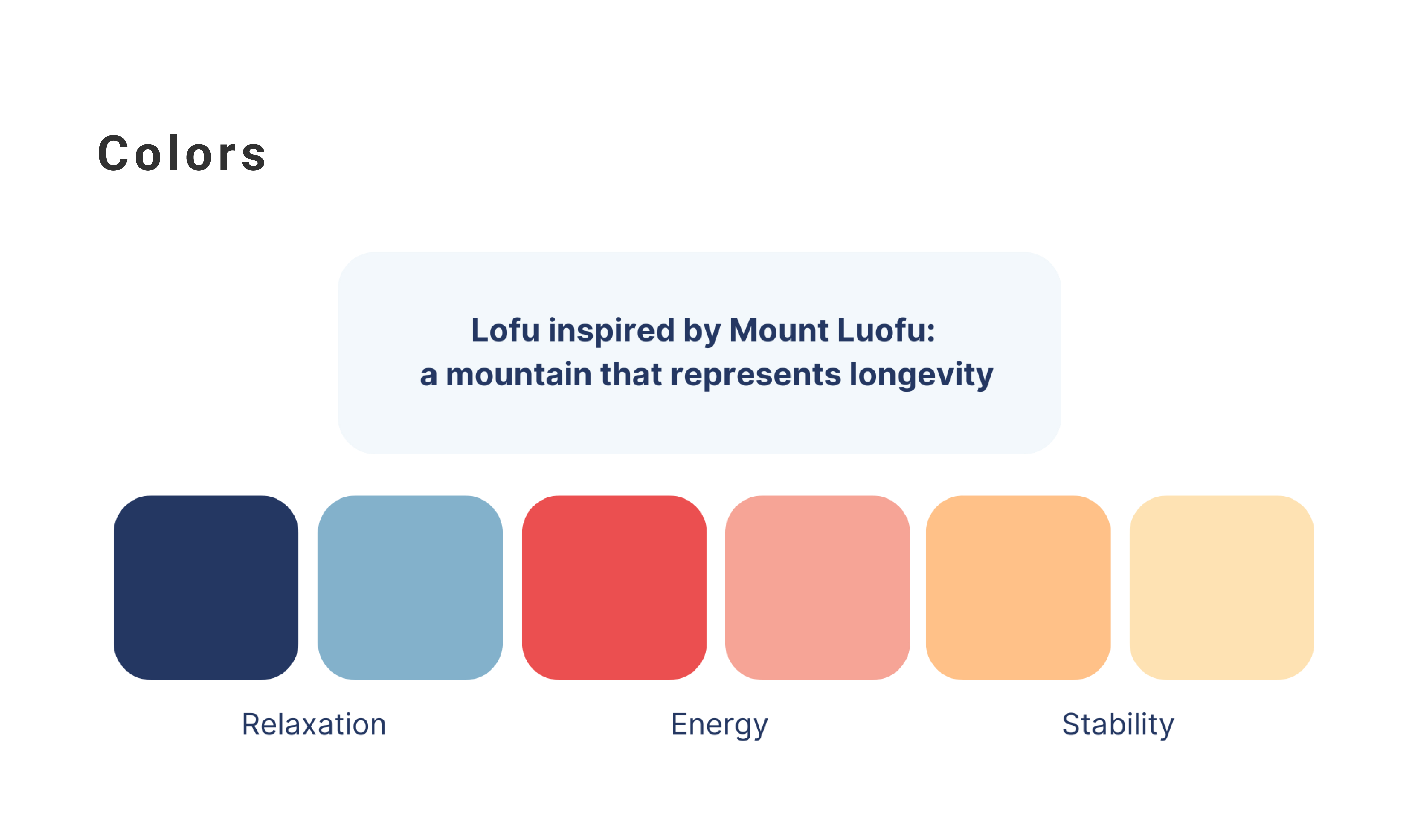
This visual direction was reinforced through warm colors, playful illustrations, and soft interface elements designed to reduce feelings of intimidation.
Testing & Iteration
Refining for clarity and warmth
Across two rounds of usability testing with participants of Asian descent, we refined both the experience and the interface based on participant feedback.
Each iteration focused on making interactions feel simpler, more welcoming, and easier to understand. We refined navigation, clarified task flows, and balanced the gamified elements so they supported emotional wellness without distracting from it.
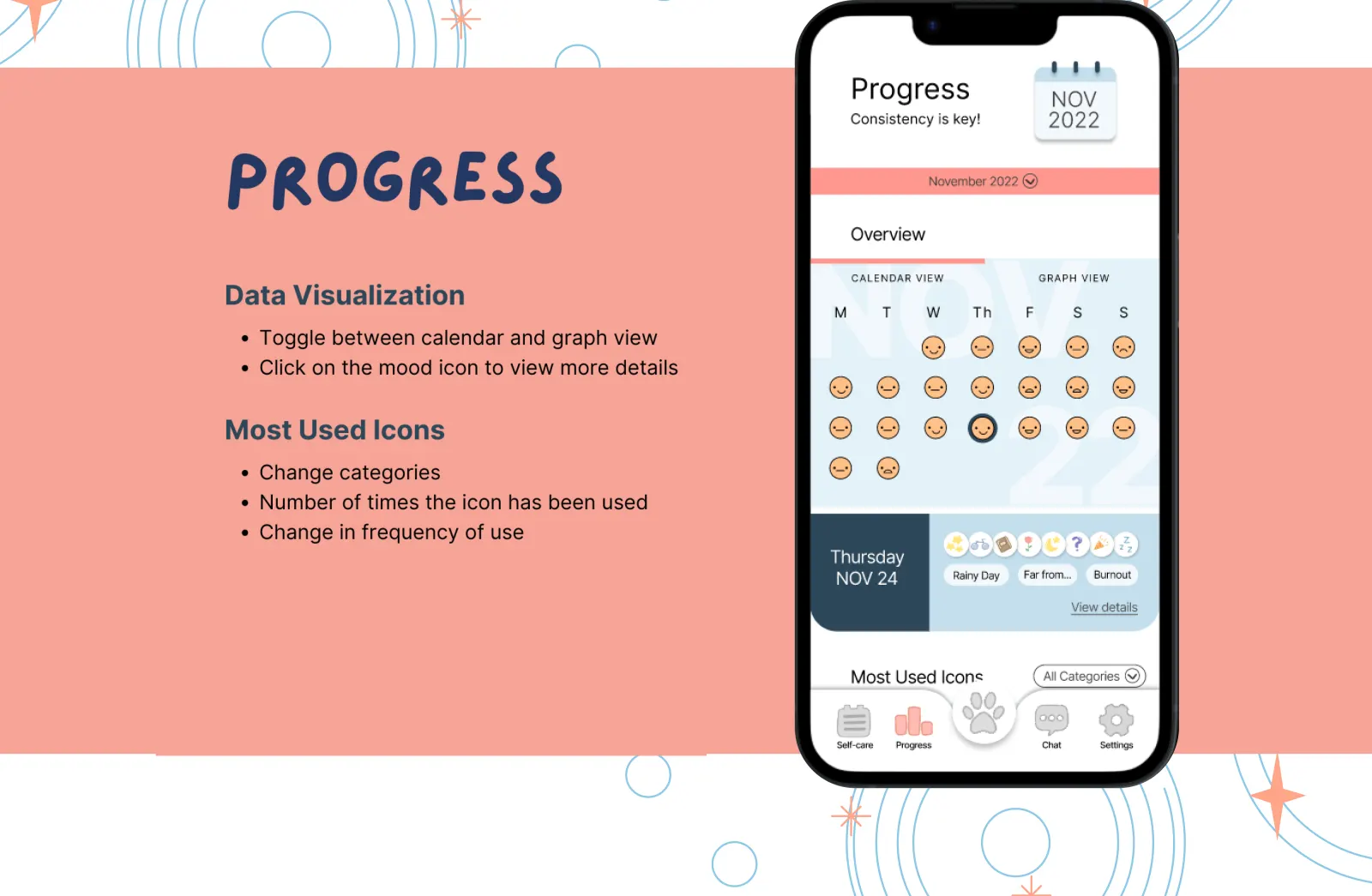
By the final iteration, the experience encouraged users to build small, consistent habits through guided activities, progress tracking, and caring for their virtual companion, making mental wellness feel like a natural part of everyday life rather than something reserved for moments of crisis.
What I Learned
Lofu taught me that designing for sensitive topics requires empathy long before visual design.
The most important challenge wasn't creating beautiful screens. It was understanding how cultural context shapes the way people interact with products.
I also learned that gamification works best when it supports a deeper purpose. In Lofu, the virtual pets weren't simply decorative features. They served as emotional anchors that encouraged consistency, reduced intimidation, and helped create an experience that felt supportive from the very first interaction.

Latest Projects