A Songwriting Tool Shaped By Interviews With Musicians
- Role
- UX/UI Designer
- Timeline
- 2023 · 1 year
- Skills
- AI Prototype, UX/UI, Branding
- Team
- 2 designers
TL;DR
Founded and shipped Chordio, a web app that unifies how musicians capture lyrics, chords, and recordings in one place. Led research with musicians, explored concepts through Crazy 8s and wireframes, then leveraged AI-assisted development to turn high-fidelity designs into a working prototype—proof that removing tool-switching friction matters more than adding features.
Overview
Rethinking how musicians save and organize ideas
Actual songwriting rarely happens in a studio. Like all good ideas, inspirations for songs appear right before bed, in the middle of a bus ride, while strumming on the couch, or in the middle of a walk. The problem is that capturing those moments often means juggling multiple apps, there must be a better way.
What if musicians could capture lyrics, chords, recordings, and song ideas all in one place?
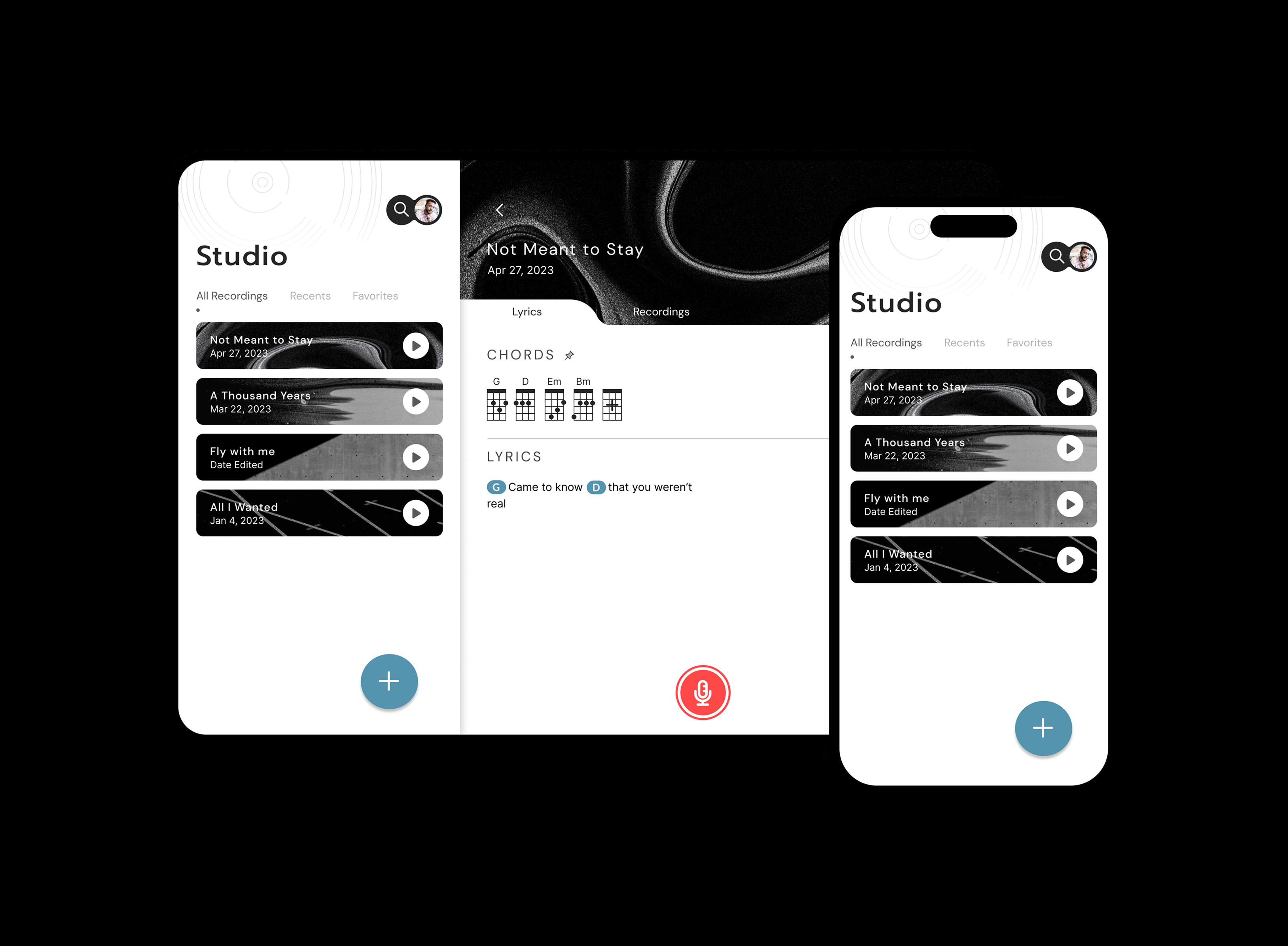
While there are numerous note-taking and voice memo apps available, none are tailored specifically for musicians, particularly those using acoustic instruments like the ukulele, guitar, or piano. I identifed a real lack of tools to help musicians document their creations, and collaborate. Enter Chordio – an online application designed to streamline the creative process for musicians by seamlessly integrating the functionality of a notes app with a voice memo app.
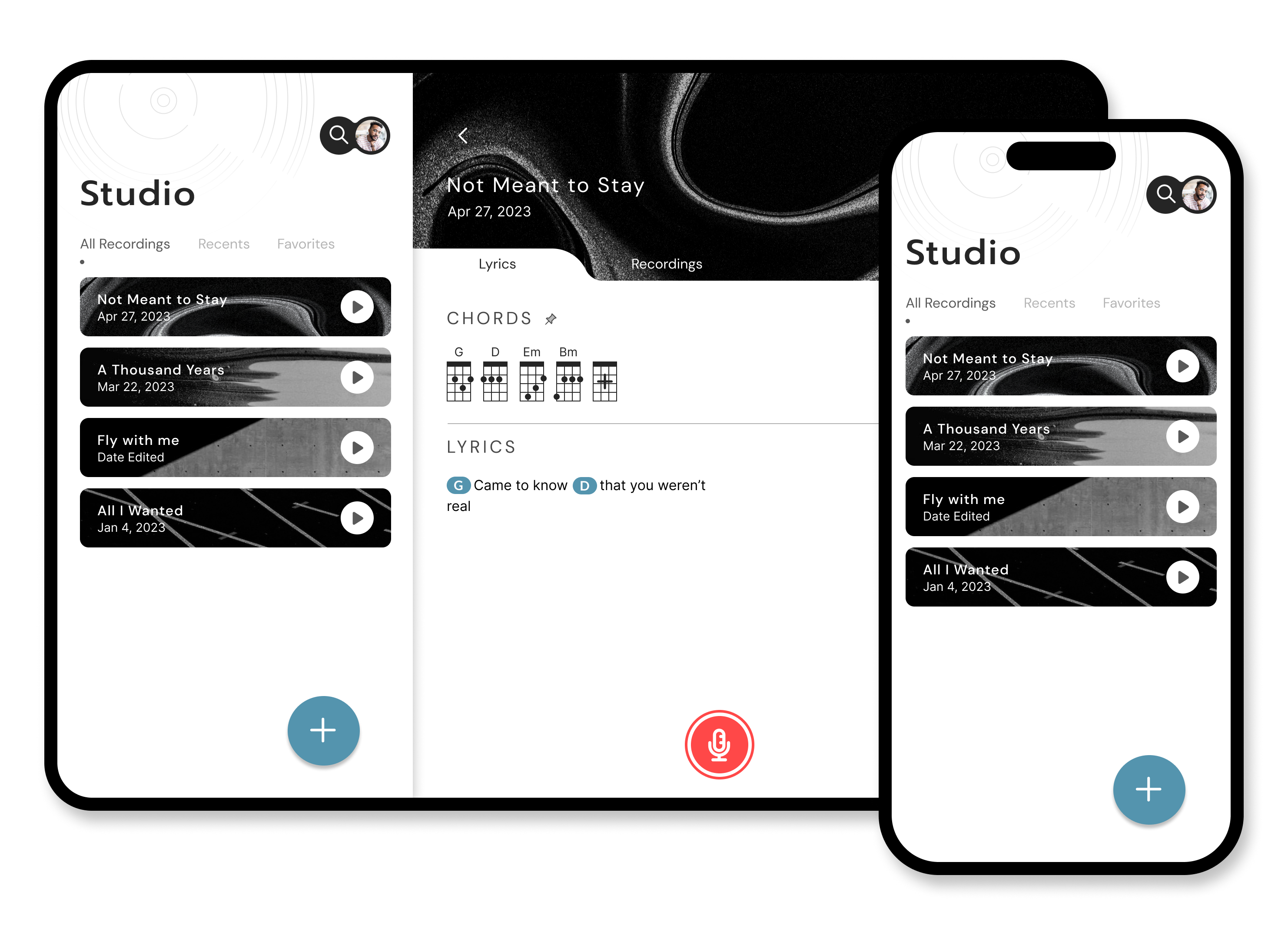
Table of contents
Problem
Creativity interrupted by too many apps
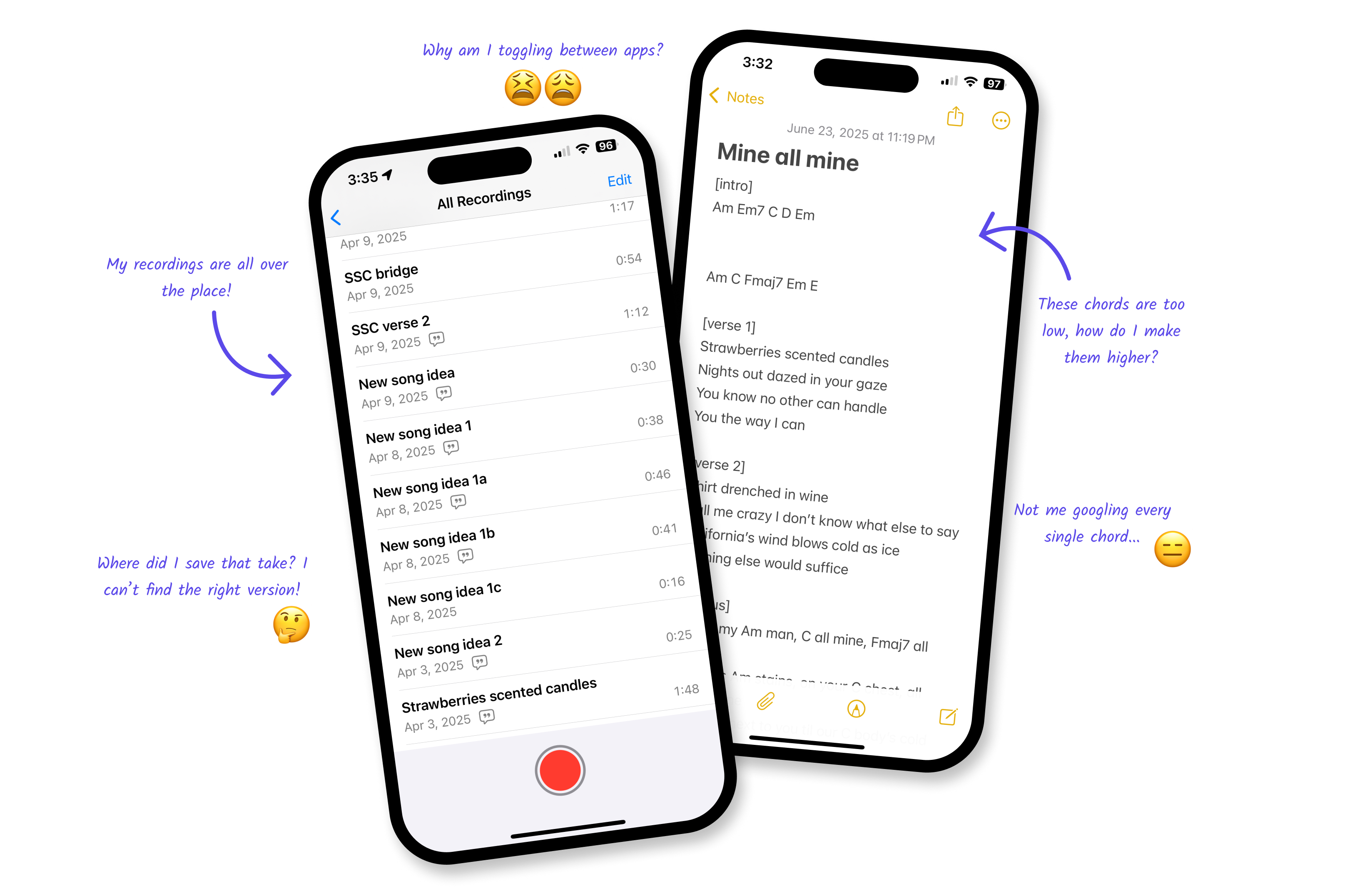
During interviews, I noticed musicians had developed surprisingly complicated workflows just to remember a song idea. Someone might record a voice memo, type lyrics into Notes, save chords in another app, then send recordings to friends for feedback.
"How might we use design to help musicians manage their creations seamlessly and efficiently?"
The biggest problem wasn't that these tools were bad. It was that creativity was constantly interrupted by switching between them. I wanted to explore whether one focused experience could help musicians capture inspiration before it disappeared.
Research
Understanding how musicians work
I interviewed musicians from different musical backgrounds to better understand how they wrote, organized, and revisited their ideas. Although everyone's creative process looked a little different, the same frustrations appeared repeatedly.
The most common pain points included switching between multiple apps, struggling to find old recordings or unfinished songs, keeping lyrics and chords disconnected from recordings, and having no simple way to collaborate on works in progress.
Alongside user interviews, I analyzed existing songwriting and recording apps to understand common interaction patterns, identify opportunities, and uncover gaps in the current experience.
Ideation
Exploring ideas before polished screens
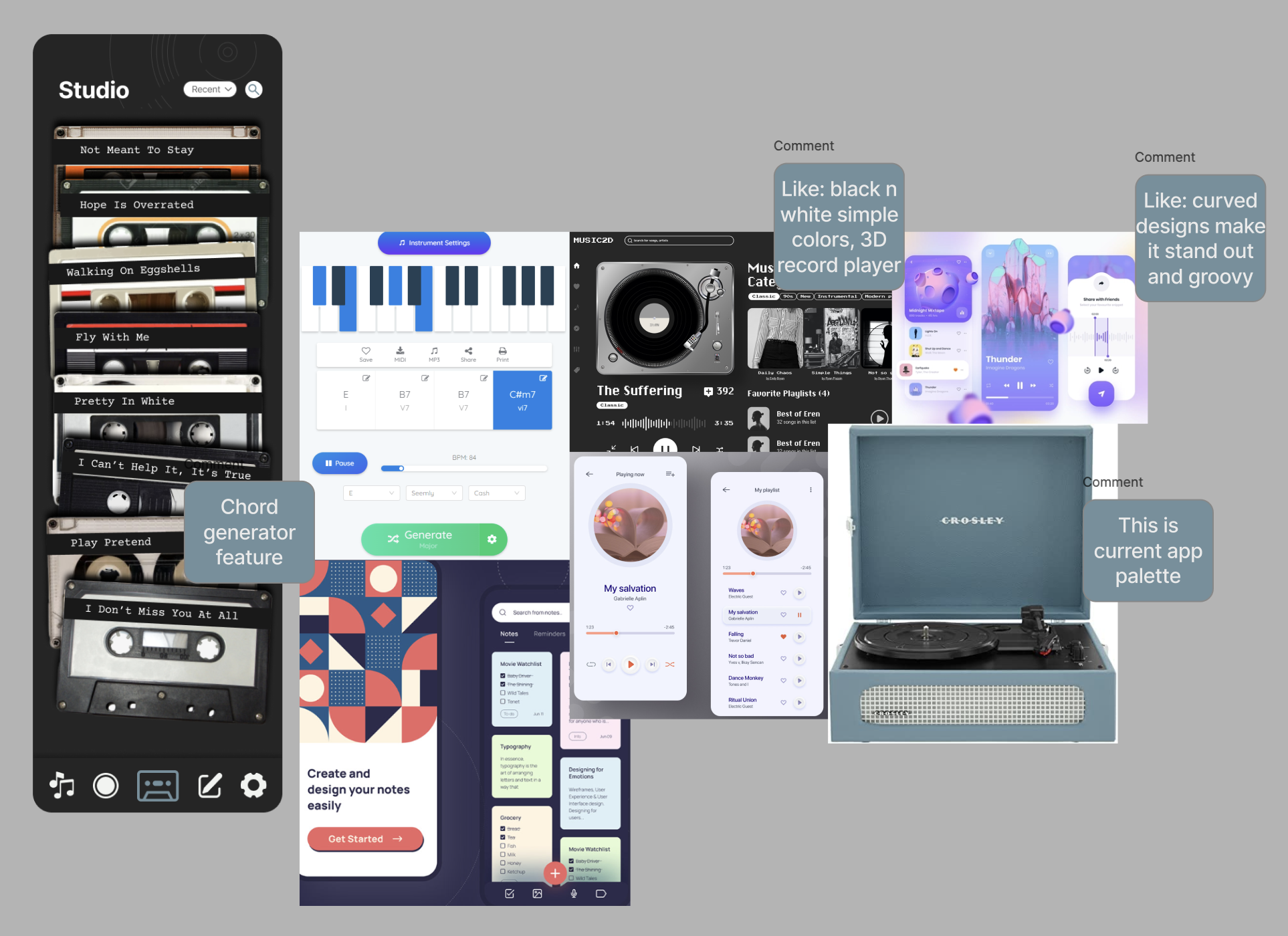
Rather than jumping straight into polished screens, I explored a wide range of ideas through Crazy 8s, rapid sketching, and low fidelity wireframes.
The goal wasn't to design the interface yet. It was to figure out the quickest and most natural way for musicians to capture an idea without breaking their creative momentum.
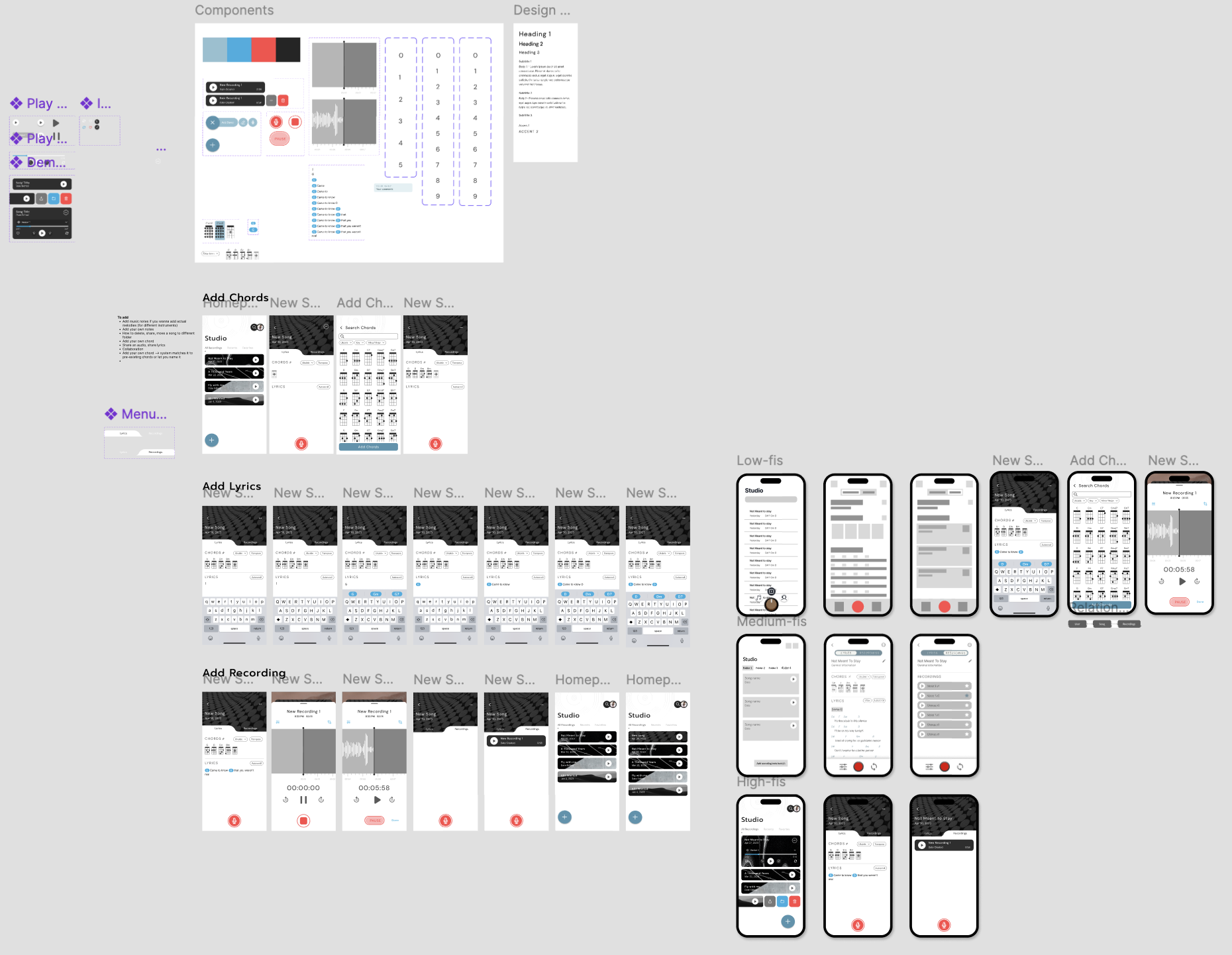
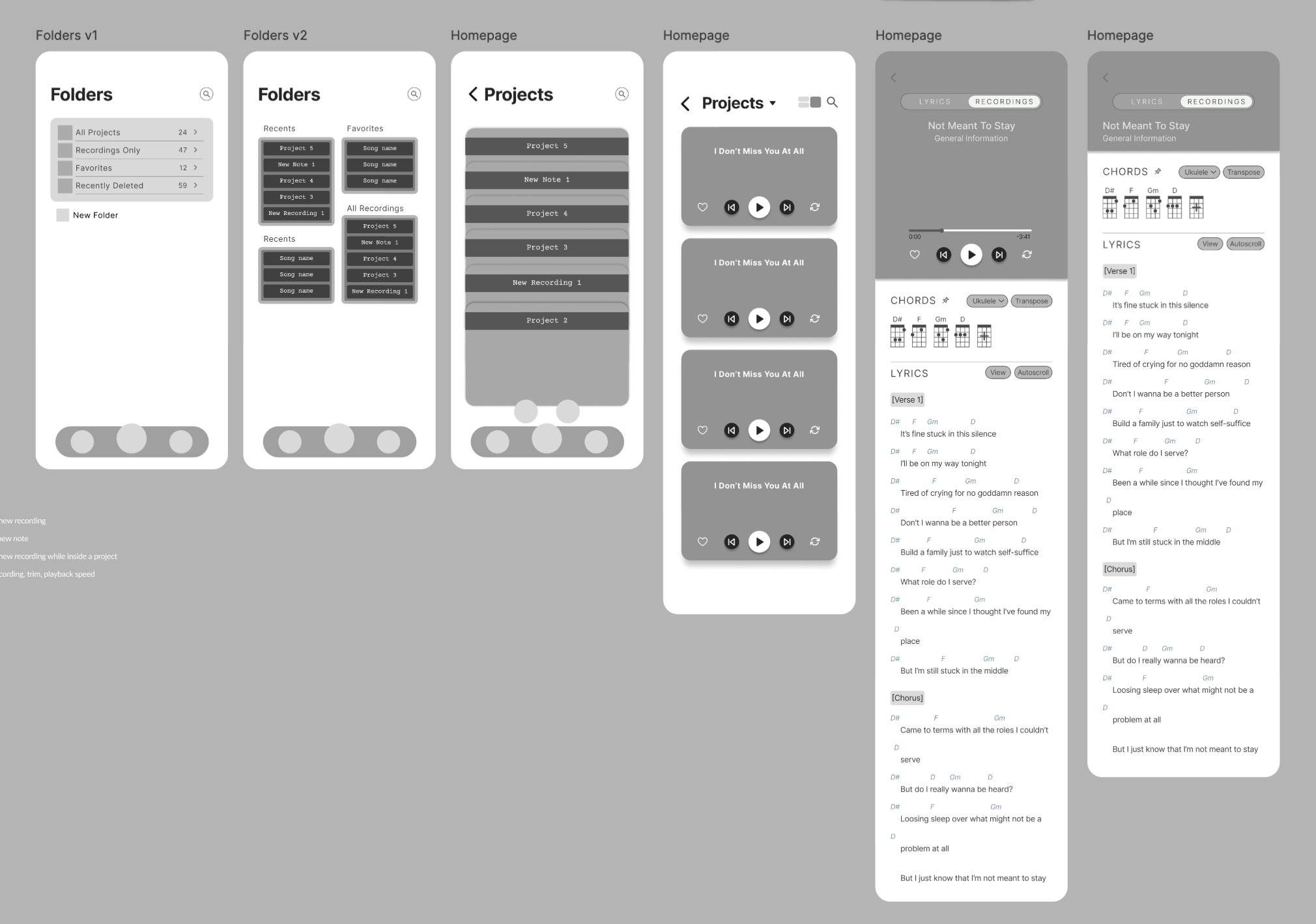
Once the strongest concepts emerged, I mapped the core user flows and translated them into wireframes to validate the experience before moving into visual design.
Prototyping
Refining the core experience
The first prototype focused on solving the core problem instead of trying to build every possible feature.
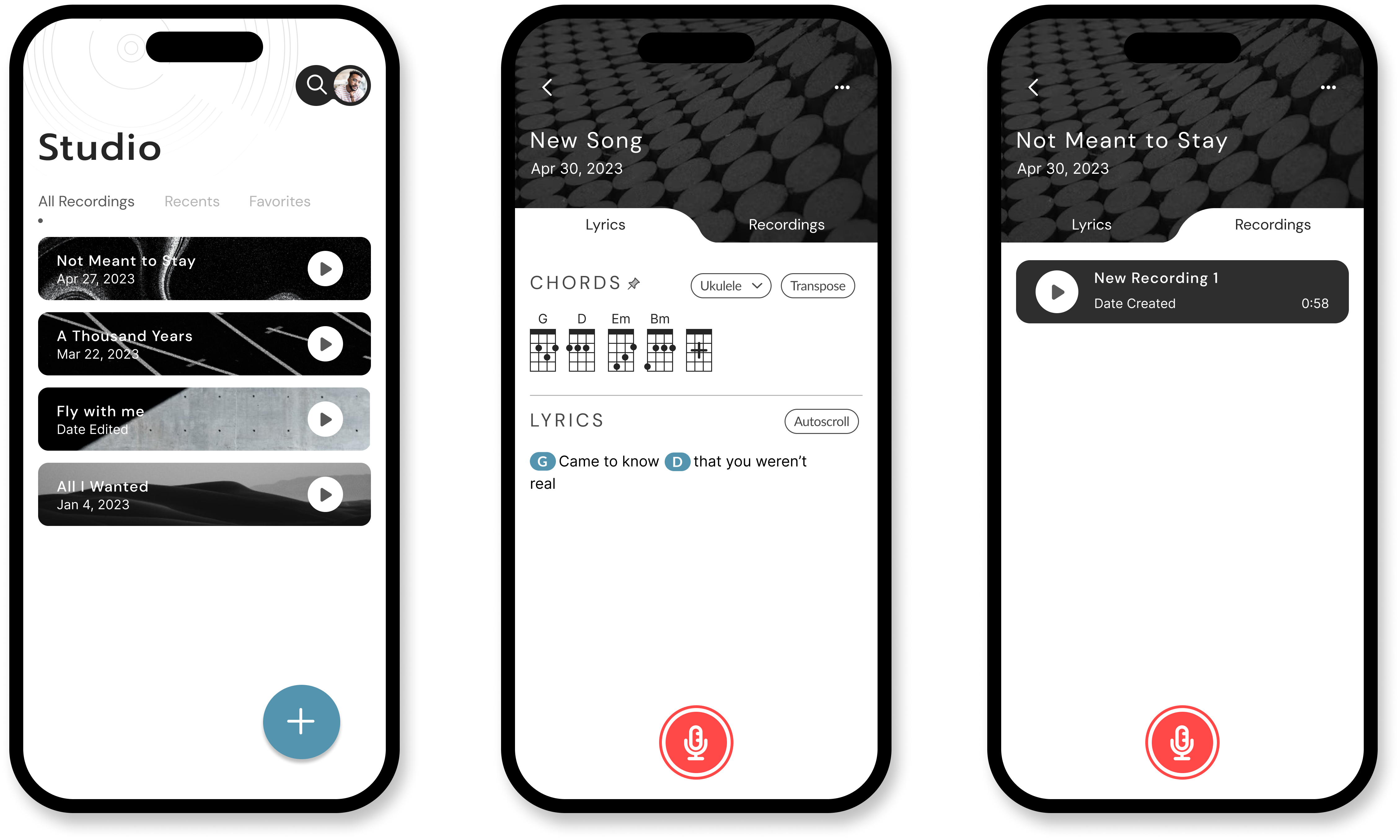
I prioritized the moments that mattered most: capturing an idea quickly, organizing it effortlessly, and making it easy to return to later.
Across multiple rounds of usability testing, I refined the navigation, simplified interactions, and removed unnecessary friction. Each iteration uncovered new opportunities to make the experience feel faster, clearer, and more intuitive.
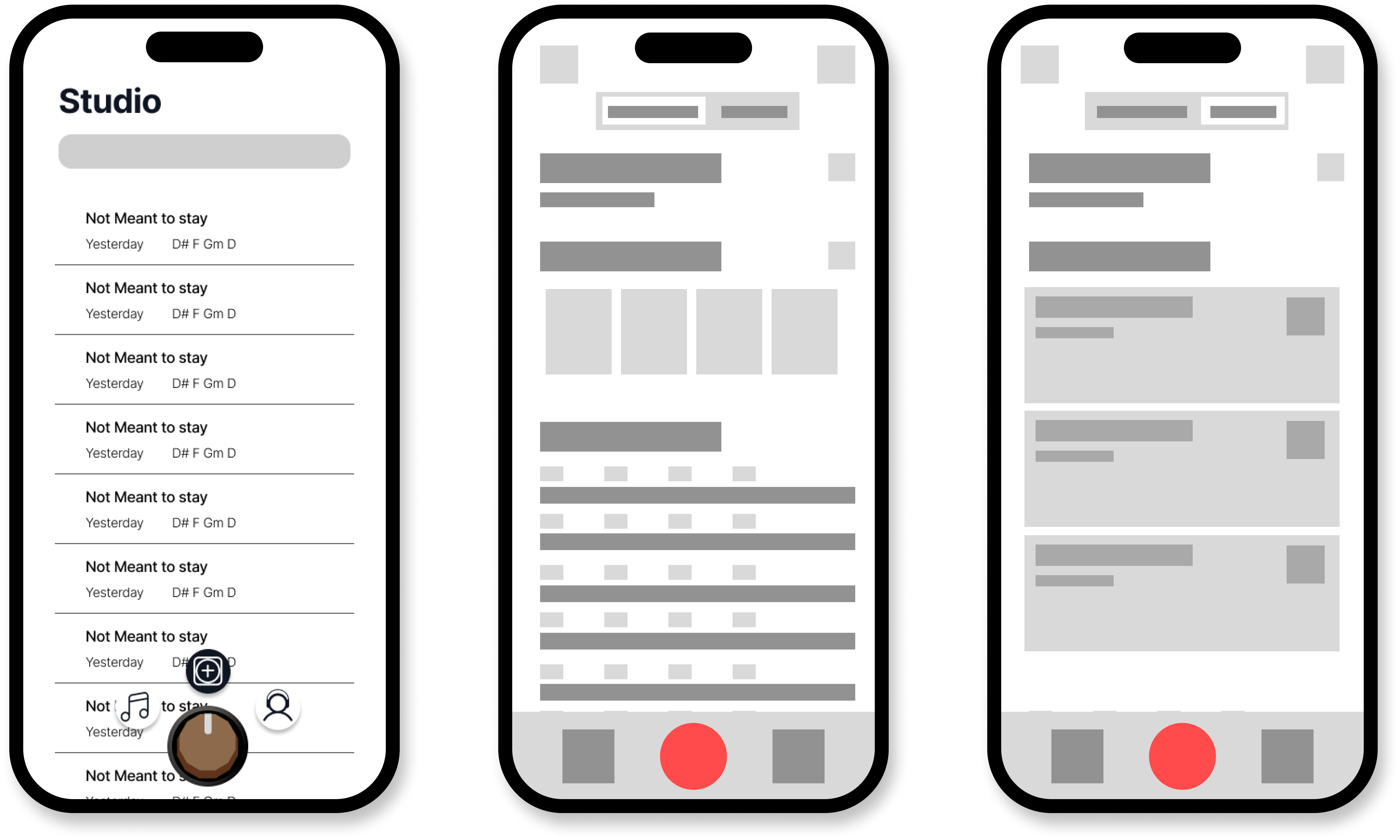
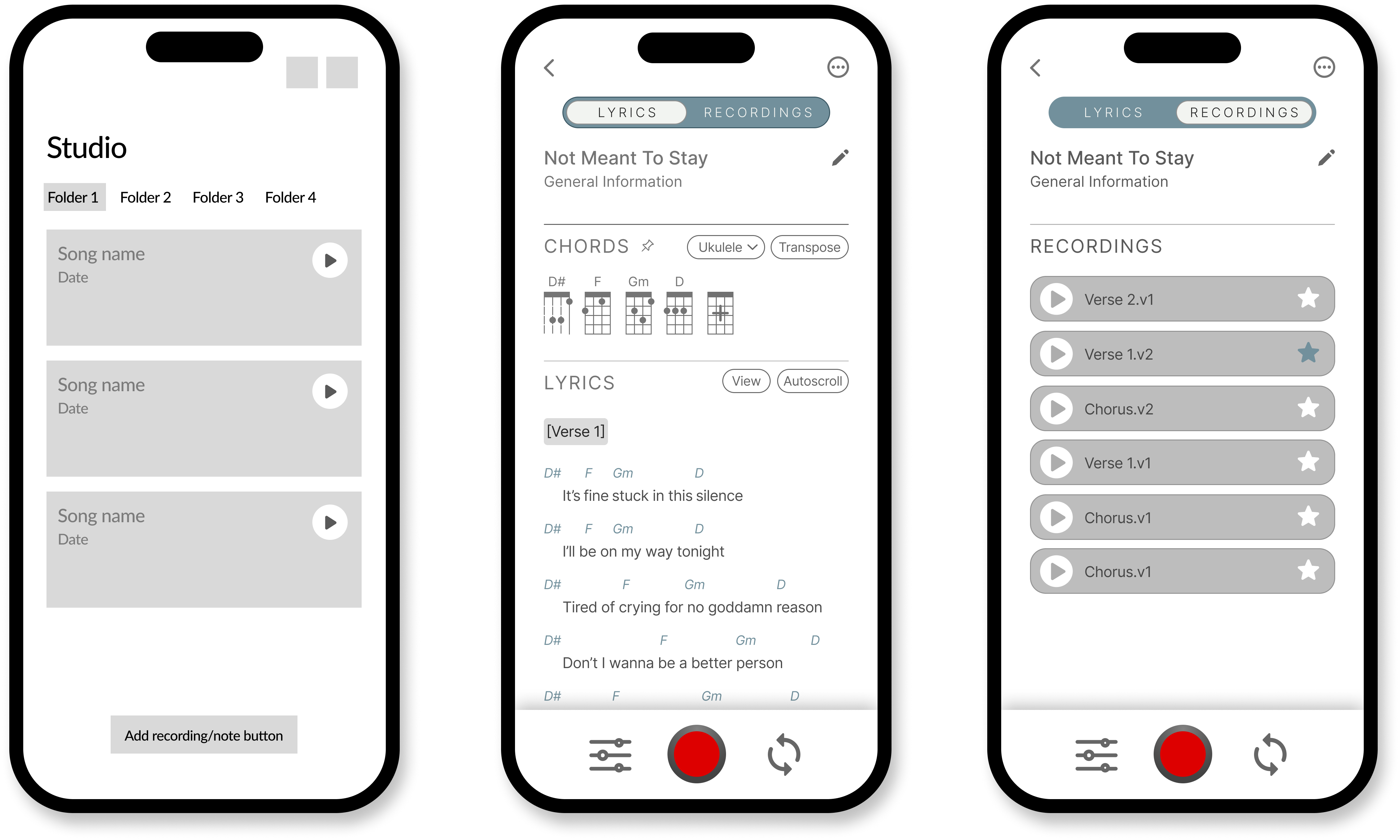
Showing Low-fidelity Chordio wireframes
Building
Bringing the idea to life with AI
After validating the experience through design, I wanted to see if the concept could become a real product.
Using Windsurf AI, I translated my UX designs into a functioning web application without having a traditional software engineering background. Working alongside AI allowed me to rapidly prototype interactions, experiment with features, and better understand the tradeoffs between ideal user experiences and technical implementation.
Although the final proof of concept differs slightly from the original prototype, the process completely changed how I think about product design. It taught me to consider technical constraints earlier, design with implementation in mind, and use AI as a collaborative tool to turn ideas into working products.
Looking back, Chordio became much more than a songwriting app. It was my first experience taking a product from an idea to research, design, branding, and a functioning prototype. More importantly, it reinforced a lesson I still carry into every project today. Great UX isn't about adding more features. It's about removing friction so people can stay focused on what they actually came to do.
Latest Projects